01 · New Orleans Therapy Center
Anchor
"Anchor" operates as both a community therapy center and an emergency shelter at a critical urban threshold in New Orleans. Responding to the region's cyclical history of flooding and displacement, the project explores architectural healing through temporal adaptability rather than static permanence. By contrasting reversible timber structures with permanent concrete cores, the building actively transforms between an open counseling space and a protective hurricane shelter—serving as a resilient framework for collective care.
- Location
- 501 Basin St, New Orleans, LA 70112
- Year
- Fall 2025
- Role
- Individual Work
- Instructor
- Meriem Chabani, Harvard GSD
A Dynamic System
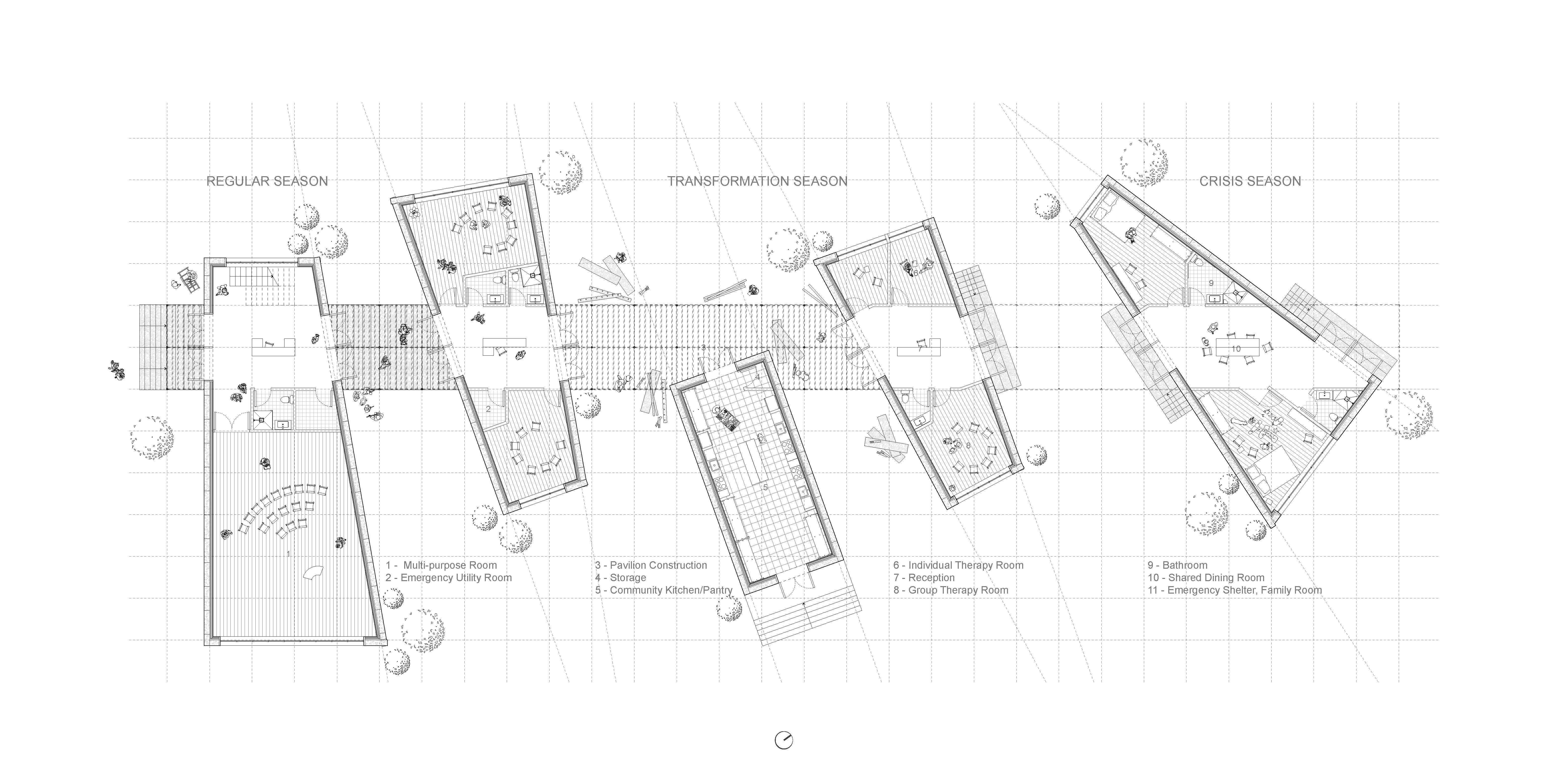
The architecture adapts to climatic cycles, shifting from a porous community center to a protective emergency shelter through reconfigurable programming.
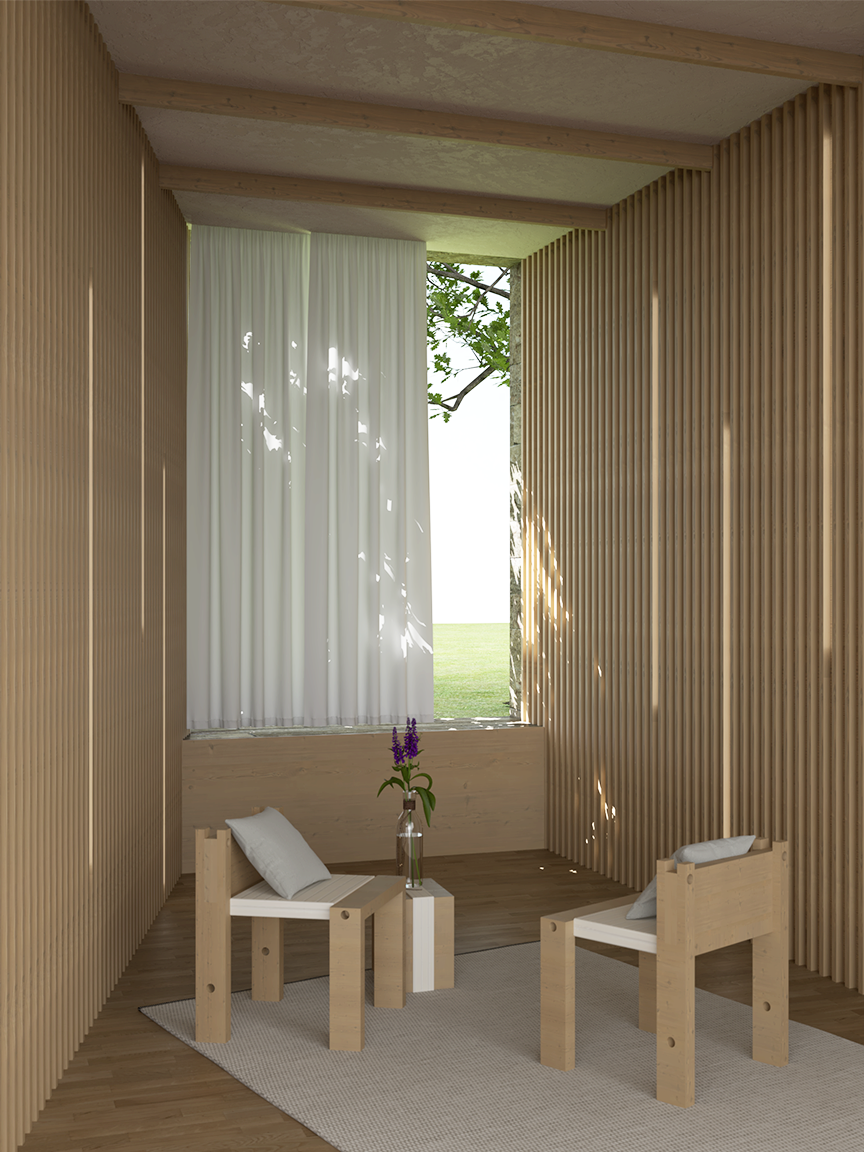
- Regular State (Dec.–May): Lightweight timber structures define open, shaded gathering spaces between permanent concrete cores; the plan is porous, encouraging everyday community use and informal circulation.
- Transitional State: Timber elements are gradually disassembled and stored by the community in preparation for hurricane season.
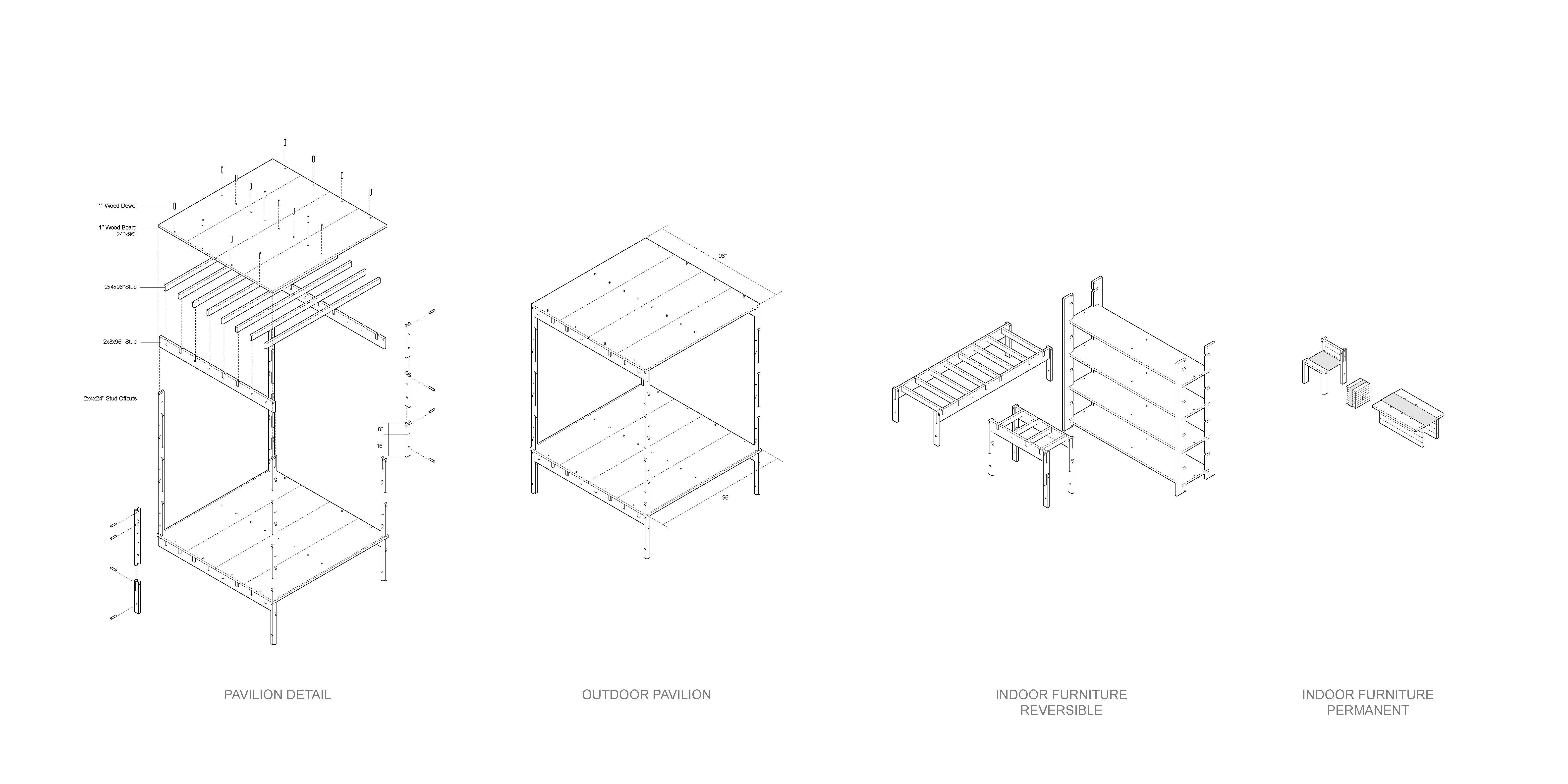
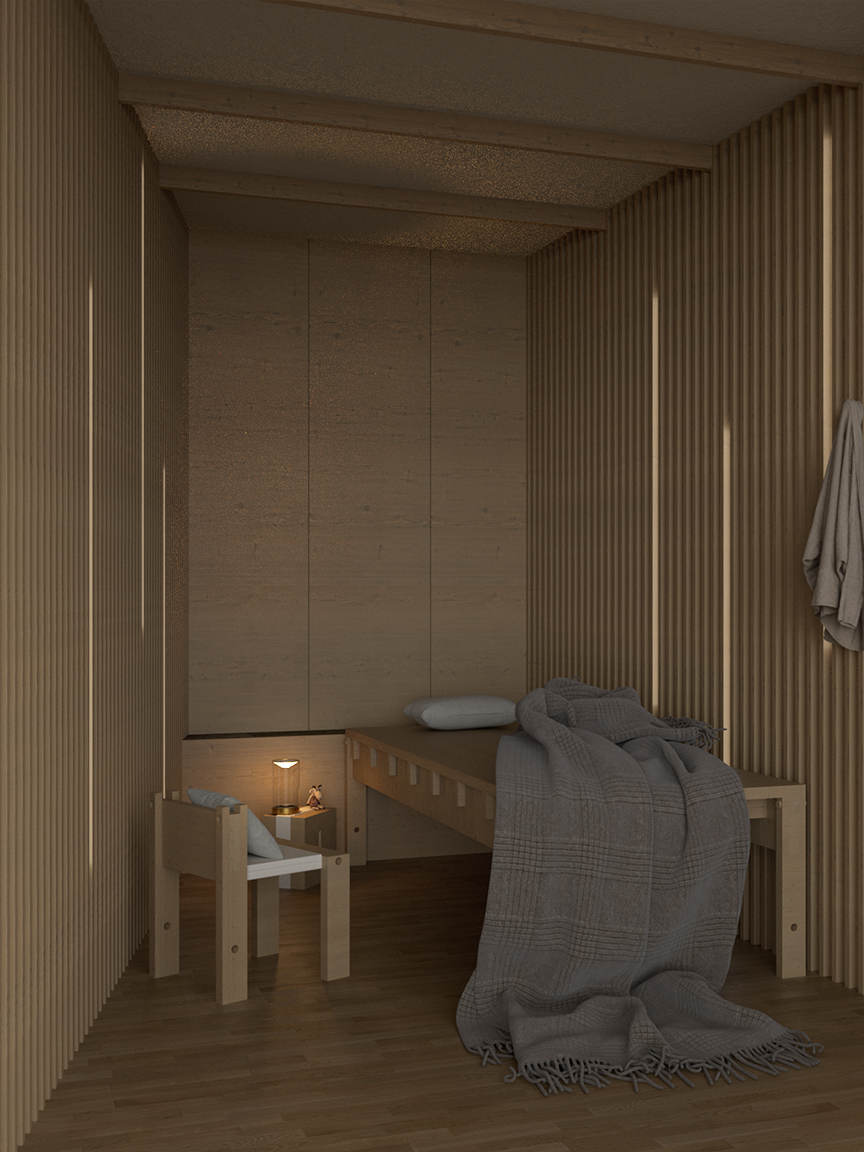
- Crisis State (Jun.–Nov.): Reversible timber modules are relocated indoors to construct partitions, beds, and support furniture. The public corridor is absorbed into the concrete cores, creating a dense, enclosed, and highly protective envelope.


Material Strategy: Permanence vs. Adaptability
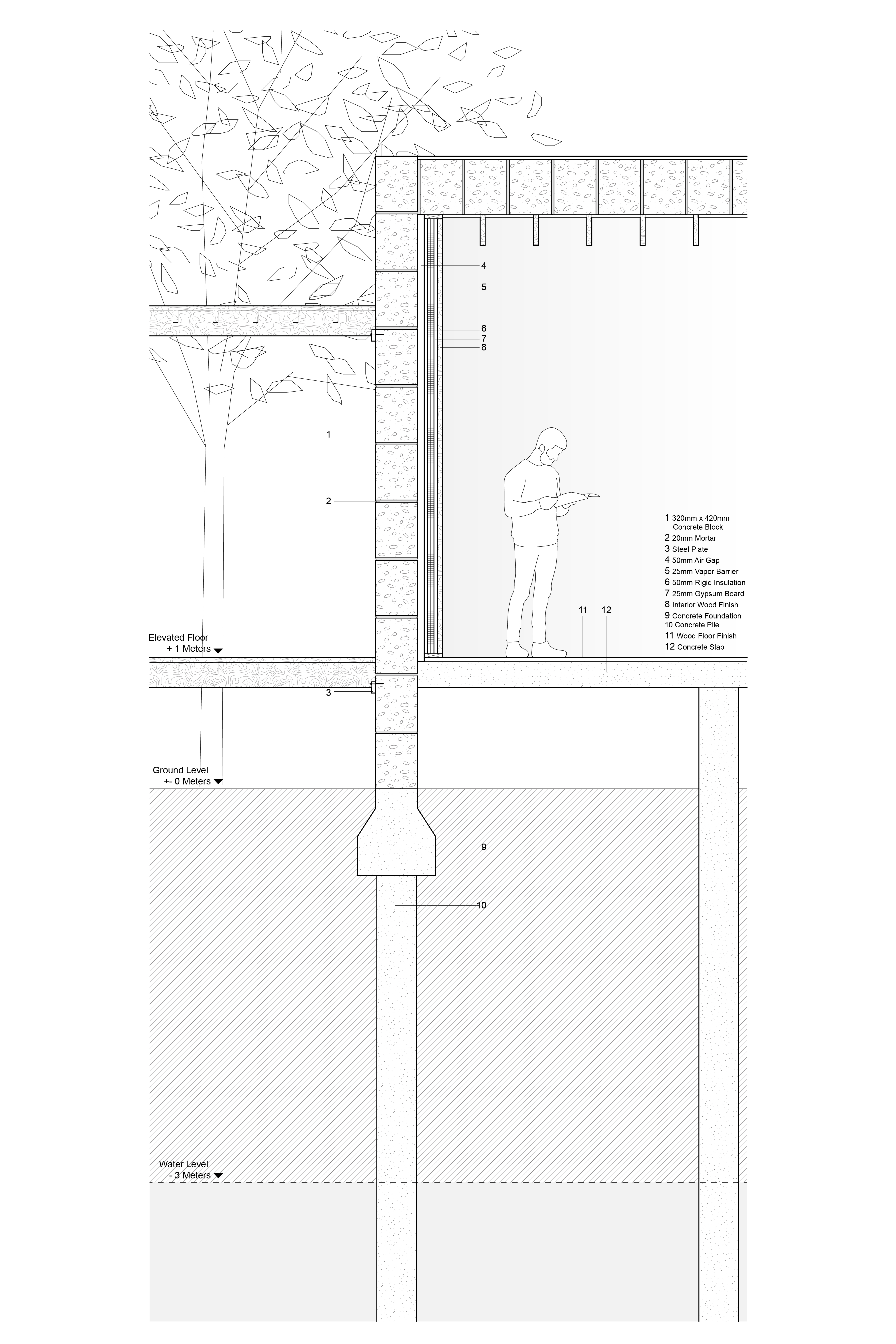
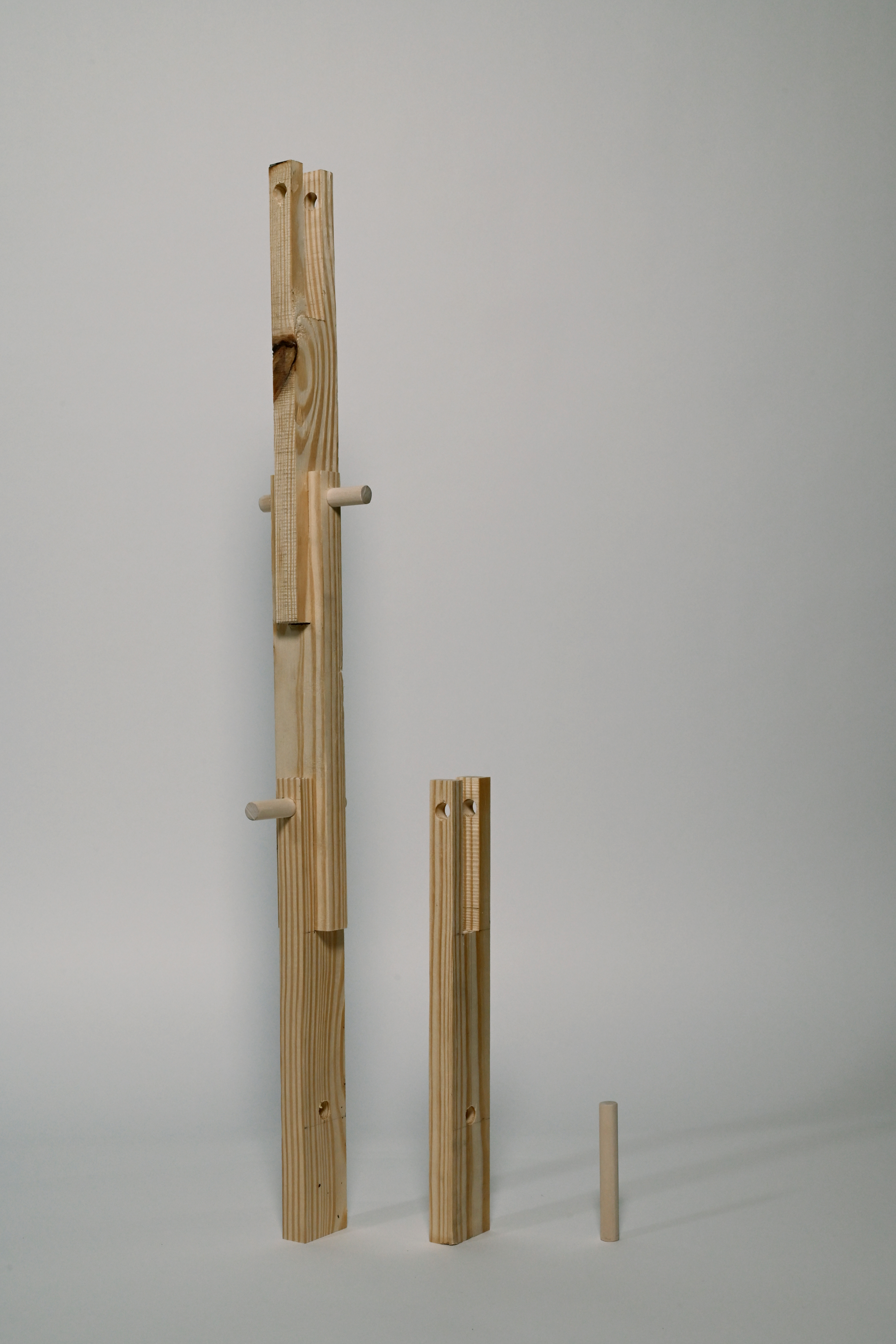
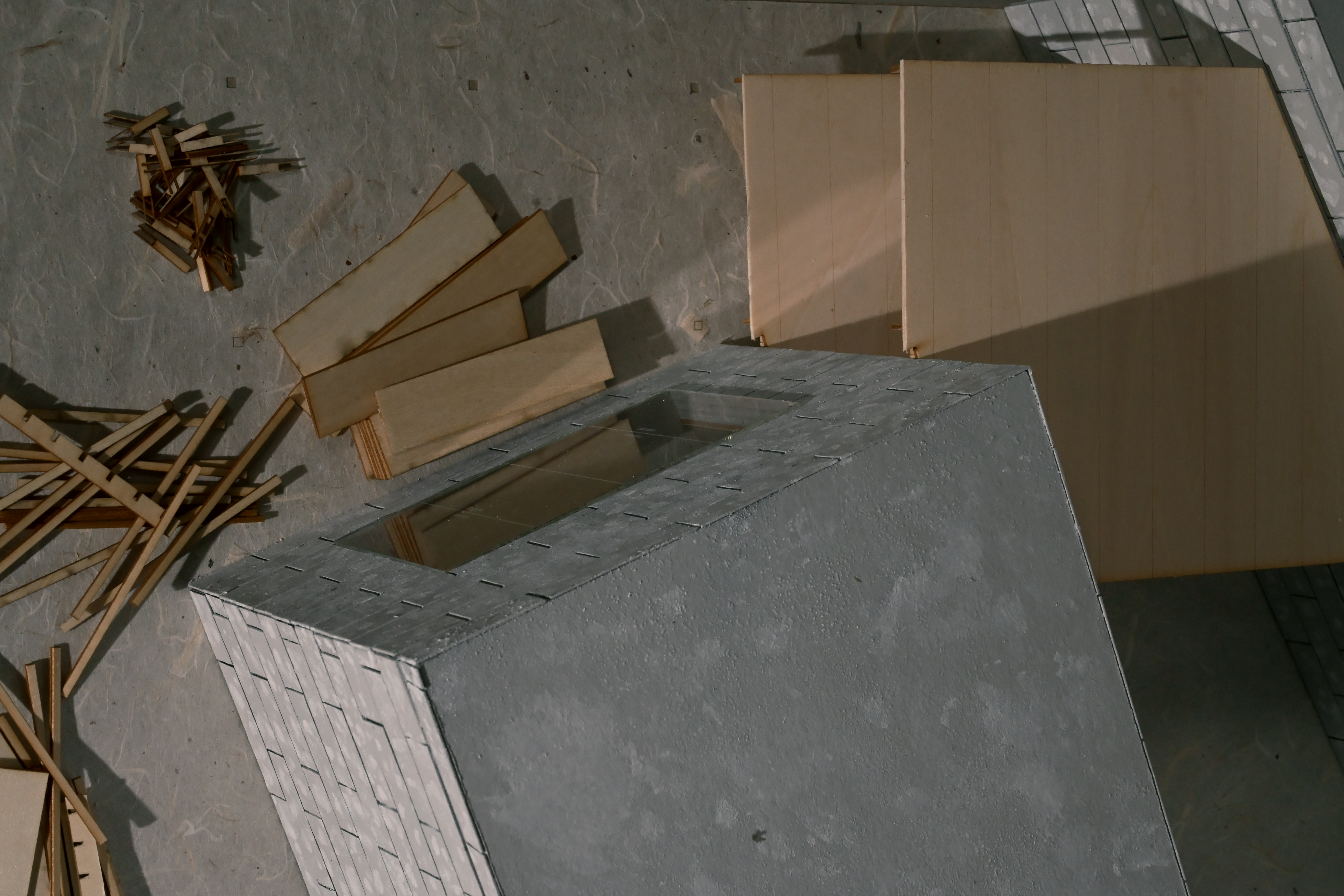
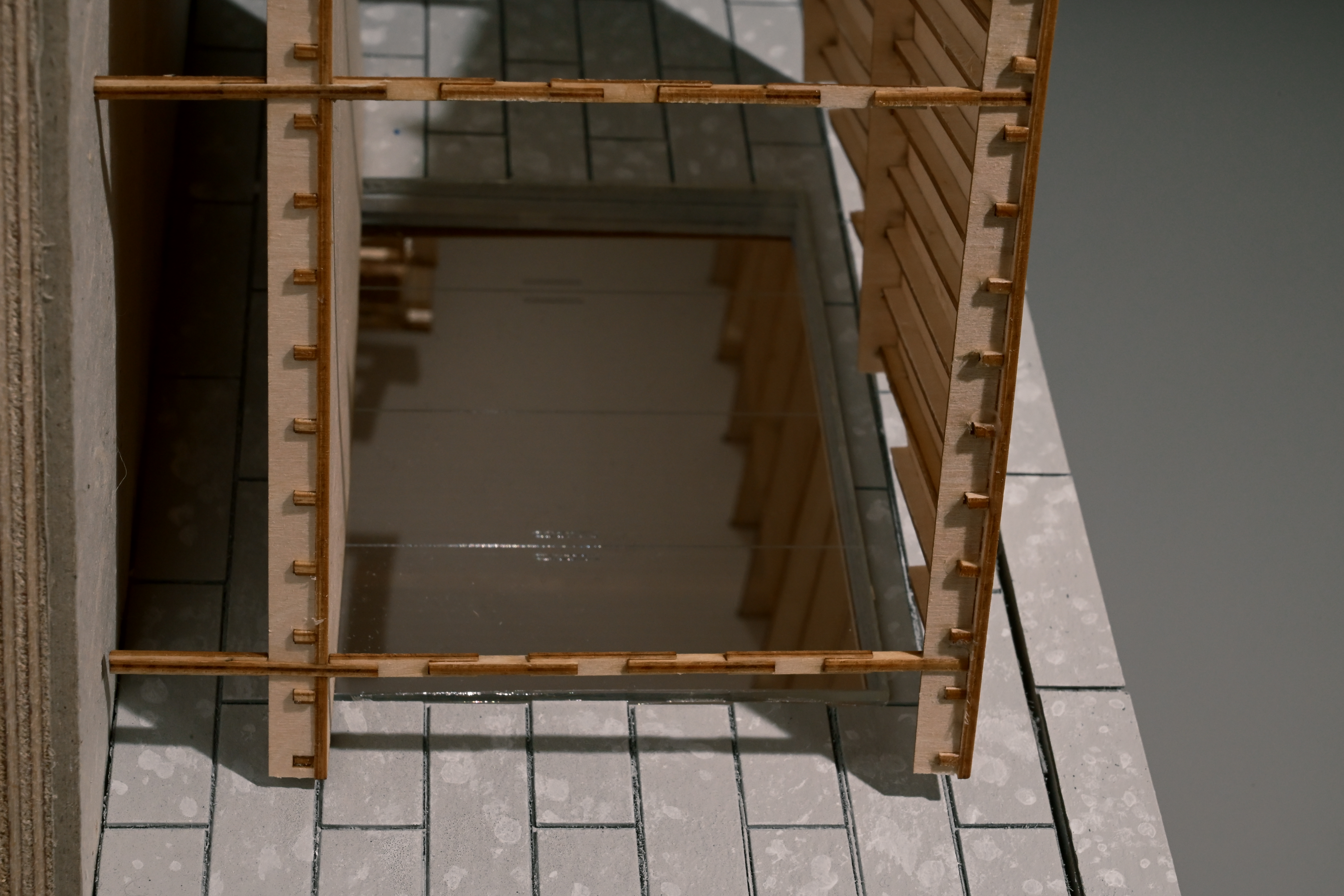
Timber elements introduce human scale, clearly defining the boundary between what stays and what adapts; lightweight timber touches the concrete through simple, reversible dry joints.
- Permanent Core (Concrete): Modular blocks cast from reclaimed limestone and river sand, providing structural and thermal anchoring.
- Reversible Timber: Constructed from neighborhood offcuts, designed for non-destructive assembly, seasonal relocation, and programmatic shifts.
From Healing to Shelter
- A room that once offered therapy and quiet reflection can transform, in a moment of crisis, into an emergency shelter. What was designed for care becomes a space of protection, gathering those in need beneath the same walls. Its identity shifts with circumstance, allowing the architecture to hold both everyday healing and moments of uncertainty, offering safety, dignity, and refuge when they are needed most
"Anchor" is less about the weight of material and more about the gravity of presence; it is a permanent foundation for the city's collective memory to rest upon.